Atala Butterfly
Eumaeus atala
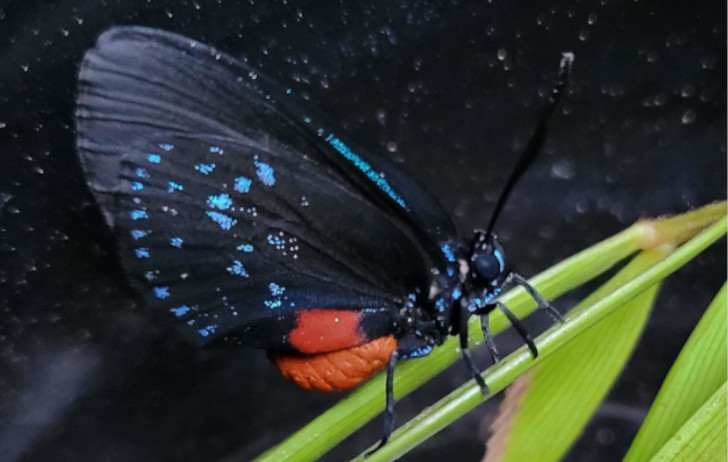
The Atala butterfly (Eumaeus atala) is a striking Florida native known for its iridescent blue-black wings and bright red abdomen. Once thought extinct, this tropical butterfly has rebounded thanks to coontie planting. Found in gardens and coastal habitats, the Atala depends entirely on native coontie as its host plant.
Distribution in Florida
Found primarily in South Florida, Central Florida, Bahamas, Cuba, Cayman Islands and Turks and Caicos.
Where to Find Atala Butterfly in Florida
Atala Butterflies are commonly found in gardens, coastal hammocks, and landscaped areas in south and central Florida where coontie plants are present.
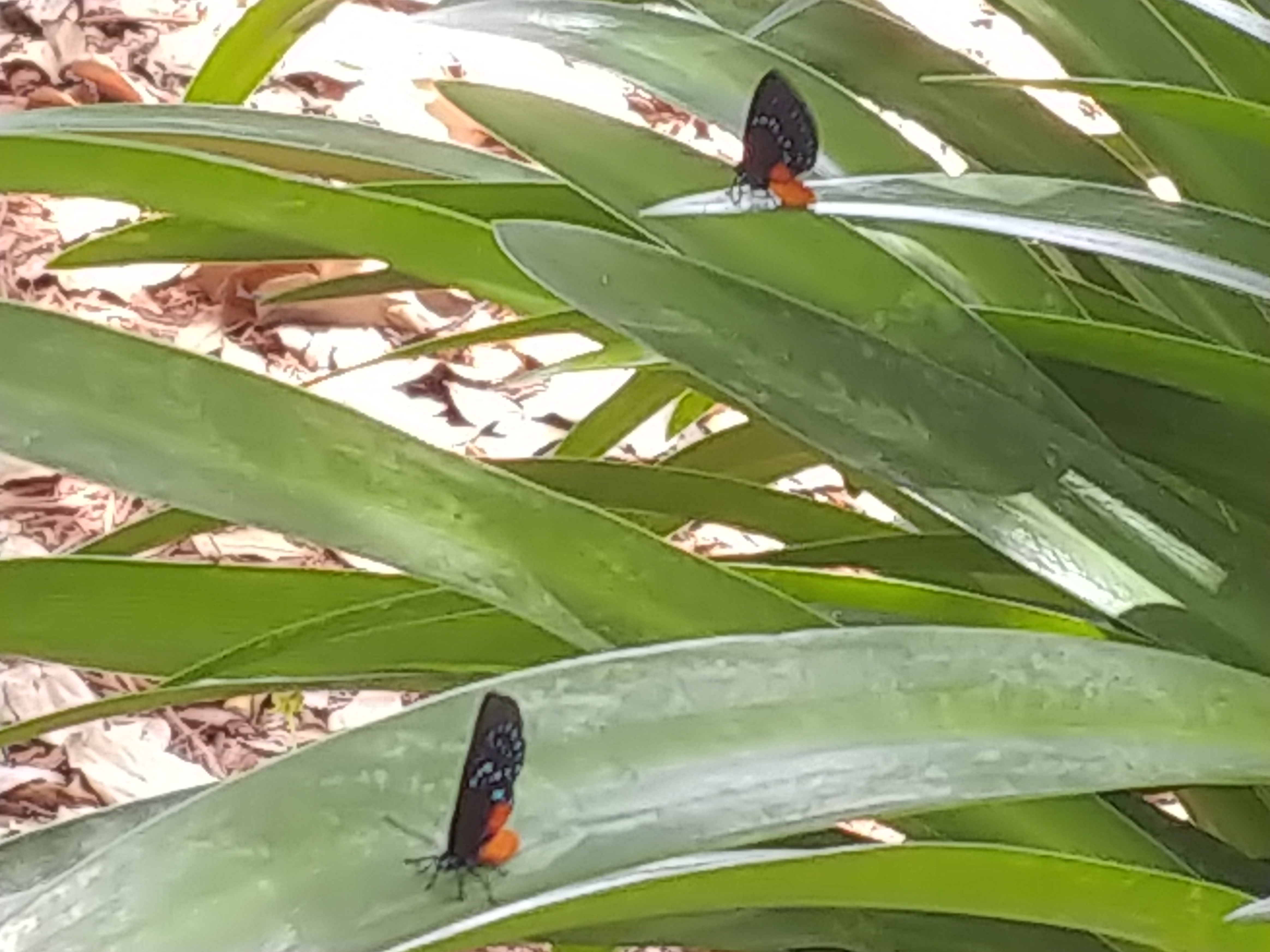
The Atala Butterfly was once considered extinct.
The Atala Butterfly was once believed to be extinct in Florida in the early 1900s due to overharvesting of coontie plants for starch production and destruction of its habitat. It was rediscovered in Miami in 1959. The Atala has rebounded significantly due to ornamental planting of coontie in Florida. Help the Atala Butterfly by planting coontie in your garden.
Lifecycle
Egg
The Atala Butterfly lays clusters of small, pale yellow eggs on the fresh growth or cones of coontie plants. Eggs are round and about 1 mm in diameter. They hatch within 4 to 7 days, in warm weather. The female Atala prefers new growth because it is tender enough for the first instars and has the right amount of poison.
Caterpillar
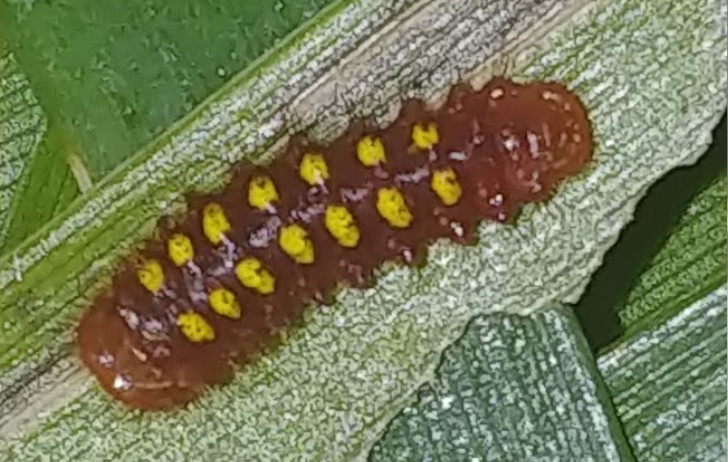
The caterpillar is bright red-orange with rows of yellow spots and fine hairs. It doesn't need to be camoflaged like other Florida butterflies bacause it is poisonous and tastes digusting...I am told... by birds. Total larval period: ~14–21 days depending on temperature and food quality.
First Instar
The newly hatched caterpillar is small and pale but quickly begins feeding on tender coontie growth. This is a tough stage because they are easy to dry out and they can't chew though the harder leaves so there must be a lot of new growth. Duration: 2–3 days.
Second Instar
The caterpillar develops stronger coloration and begins feeding more aggressively, usually still in a group. Duration: 2–3 days.
Third Instar
By this stage, the bright red and yellow coloration becomes more vivid, serving as a warning to predators. This is nice because they also become more toxic. Duration: 2–3 days.
Fourth Instar
The caterpillar grows rapidly and may feed in small groups on the same plant. This can make gardeners sad because they can deflower it but it will comw back so no pestacides. Duration: 2–4 days.
Fifth Instar
The final larval stage reaches about 1 inch in length. The caterpillar then leaves the host plant to pupate nearby. Duration: 3–5 days.
Formation of the Chrysalis
After completing the fifth instar, the caterpillar forms a compact chrysalis attached to a leaf or nearby surface.
The chrysalis stage lasts approximately 8 to 14 days, depending on temperature.
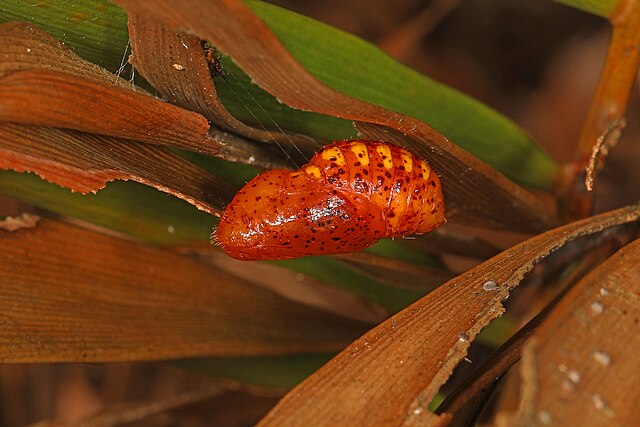
What does the Atala chrysalis look like?
The chrysalis is smooth, compact, and ranges from tan to brown. It blends well with surrounding plant material.
How Long Does the Atala Stay in the chrysalis?
The butterfly typically emerges within 8 to 14 days, though cooler temperatures may extend development time.
Adult Behavior
How Long do Atala Butterflies Live?
Adult Atala Butterflies typically live 1 to 3 weeks, depending on environmental conditions.
What should I plant to attract Atala Butterflies.
Adults feed on nectar from small flowers such as Spanish needle, wild coffee, and other native blooms. They often remain close to coontie plants.
Mating and Reproduction
Males patrol areas with coontie plants to locate females. After mating, females lay clusters of eggs directly on the host plant. Multiple generations can occur throughout the year due to Florida's woam climate.
How to Tell Male and Female Atala Butterflies apart.
Males and females look very similar, though females are often slightly larger. You would really need a microscope to be sure so you never really know.
Do Atala Butterflies Migration?
Atala Butterflies do not migrate. Populations expand locally where coontie is available. If you plant it they will migrate to your garden.
Raising Atala Butterflies
Atala butterflies are variousery difficult to raise because the host plant, Coontie, is toxic and personally gives me a rash. It is also very hard to keep cuttings alive and the first few instars are very picky. Additionally, you have to be careful because the eggs fall of the plant easier then other species. My most successes have come from bring inside a potted plant but this can get eaten very fast.
Table of Contents
- Egg
- Caterpillar
- Chrysalis
- Adult Behavior
- How to Raise
Family:
Lycaenidae
Common Names:
Coontie Butterfly
Size:
Wingspan between 1.5 and 2 inches (38–51mm).
Host Plant:
Coontie (Zamia integrifolia)
Conservation Status:
Threatened
Did you know?
The Atala is one of the few butterflies in North America whose caterpillars feed on cycads an ancient plant that predates dinosaurs.
How fast can a Atala Butterfly fly?
Atalas have a slow but deliberate flight. They dont fear predators due to thier toxens and fly like it.
Did you know?
On a hot summer day Atala Butterflies will sometimes leave thier host plant and hang out under a shade tree.
Predators and Threats
Birds and small predators may attack them, but toxins stored from coontie plants make both caterpillars and adults distasteful.
Did you know?
Atala Butterfies bright red-orange abdomens and red spots let predators know they are poisonous. this is colored aposematic coloration.