Tiger Swallowtail
Papilio glaucus
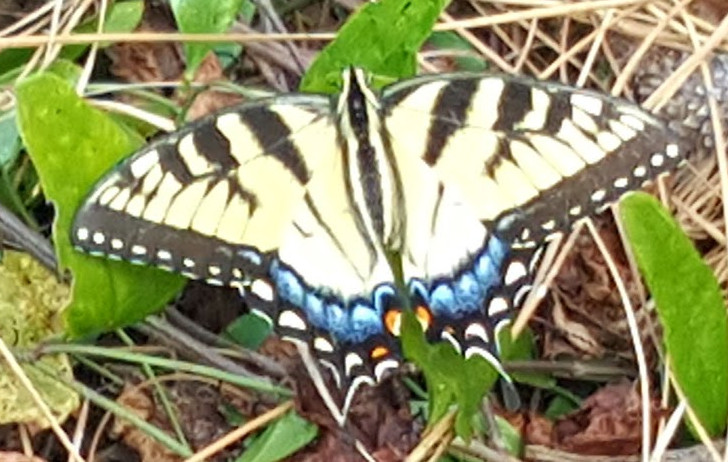
The Eastern Tiger Swallowtail is a large, striking butterfly known for its bright yellow wings marked with bold black tiger-like stripes. Its elegant tails and graceful flight make it one of the most recognizable butterflies in the eastern United States.
Distribution in Florida
Found throughout eastern North America, from southern Canada down to Florida and west to parts of Texas and the Great Plains.
Where to Find Tiger Swallowtail in Florida
Eastern Tiger Swallowtails are commonly found in woodlands, forest edges, gardens, parks, and along rivers and open fields throughout much of the eastern U.S.
Lifecycle
Egg
The Eastern Tiger Swallowtail begins life as a small, smooth, green egg laid singly on the leaves of host trees such as tulip poplar or wild cherry. Eggs are round and about 1–1.5 mm in diameter. They hatch in approximately 4 to 10 days, depending on temperature.
Caterpillar
The caterpillar undergoes five instar stages. Early instars resemble bird droppings for camouflage. Later instars turn bright green with large, eye-like spots that help deter predators.
First Instar
The first instar caterpillar is small and dark brown with white markings, mimicking bird droppings for protection. Duration: 3–4 days.
Second Instar
The second instar grows slightly larger but maintains its camouflage appearance. Duration: 3–4 days.
Third Instar
By the third instar, the caterpillar begins transitioning toward its green coloration while still retaining some camouflage. Duration: 3–4 days.
Fourth Instar
In the fourth instar, the caterpillar becomes bright green with prominent false eye spots near the head. Duration: 3–4 days.
Fifth Instar
This final larval stage reaches up to 2 inches in length. When disturbed, it may extend a forked orange organ called an osmeterium that emits a defensive odor. Duration: 4–6 days.
Formation of the Chrysalis
After the fifth instar, the caterpillar attaches itself to a vertical surface using silk and forms a chrysalis held upright by a silk girdle.
The chrysalis stage lasts approximately 10 to 20 days during warm months. In colder regions, the chrysalis may overwinter and emerge the following spring.
What does the Eastern Tiger Swallowtail chrysalis look like?
The chrysalis is typically green or brown, allowing it to blend in with leaves or bark. Its angular shape helps it resemble a small twig.
How long does the Eastern Tiger Swallowtail stay in the chrysalis?
During summer generations, the butterfly emerges in about 10 to 20 days. Overwintering chrysalides may remain dormant for several months.
Adult Behavior
Lifespan
Adult Eastern Tiger Swallowtails typically live 2 to 4 weeks, depending on environmental conditions.
Feeding
Adults feed on nectar from flowers such as milkweed, lilac, wild cherry, and butterfly bush. Males are frequently seen puddling on damp soil to gather minerals.
Mating and Reproduction
Males patrol open areas in search of females. After mating, females lay single eggs on host tree leaves. Multiple generations may occur each year in warmer climates like Florida.
How to Tell Male from Female
Males are bright yellow with black tiger stripes and narrow black borders. Females may appear similar or may be dark morph, with mostly black wings and subtle striping.
Migration
Eastern Tiger Swallowtails do not migrate long distances but may shift locally based on seasonal conditions.
How to Attract Eastern Tiger Swallowtails to Your Garden
Plant native host trees such as tulip poplar, wild cherry, or sweetbay magnolia. Provide nectar plants like milkweed, lantana, and native flowering shrubs. Avoid pesticides to protect both caterpillars and adults.
Conservation Tips
Support Eastern Tiger Swallowtail populations by planting native trees and flowering plants, preserving woodland edges, and limiting pesticide use. Creating a diverse garden habitat benefits not only swallowtails but many other native pollinators.
Table of Contents
- Egg
- Caterpillar
- Chrysalis
- Adult Behavior
- How to Raise
Family:
Papilionidae
Common Names:
Eastern Tiger Swallowtail
Size:
Wingspan between 3.1 and 5.5 inches (80–140mm).
Host Plant:
Tulip tree, Wild cherry, Sweetbay magnolia, Ash, Willow
Conservation Status:
The Eastern Tiger Swallowtail is not considered threatened, though habitat loss and pesticide use can impact local populations.
Did you know?
They are strong fliers and often glide gracefully between flaps of their large wings.
How fast can a Tiger Swallowtail fly?
They have a powerful and steady flight, often gliding smoothly between bursts of wingbeats.
Did you know?
Males frequently gather at mud puddles to drink minerals, a behavior known as puddling.
Predators and Threats
Birds, spiders, and parasitic wasps may prey on caterpillars and adults. Camouflage and mimicry help reduce predation.
Did you know?
Female Eastern Tiger Swallowtails can be either yellow like males or dark morph (almost black), which helps protect them from predators by mimicking toxic species.